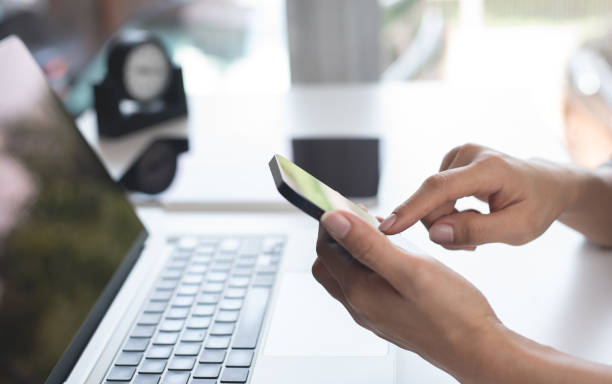
In Argentina, the situation of people looking up currency charts on their phones during their commutes, in line or when they are relaxing at home is no longer a rare phenomenon. The emergence of mobile applications has silently transformed the way in which financial operations have been integrated into everyday life, and involvement in international markets has become visibly personal. A desktop setup and technical knowledge that used to take time are now accessible in a few taps and forex trading is now open to anyone who had previously considered it a barrier.
There is an interesting development in smaller cities and provinces where the availability of financial services is a problem. Mobile connectivity has helped close that divide as people in non-metropolitan areas will be able to use the same tools and platforms as those in Buenos Aires. It is not only a matter of convenience but also a matter of inclusion whereby more people are able to access financial opportunities regardless of location. This has meant that the trading business is no longer clustered in certain regions but is becoming more uniformly distributed throughout the nation.
The key factor behind this increased adoption is ease of use. The user interfaces of most applications are simple to use, the tutorials are user-friendly, and the inbuilt analytics help beginners to familiarize themselves with the market dynamics. The users do not receive a bunch of complex information but can build up their knowledge step by step and get engaged in the process. This combination of study and action makes the process more interactive, promoting a consistency over a one-time attempt.
The use of these tools is changing daily life in subtle ways as it becomes part of the daily routine of individuals. There are those users who check the market updates along with their social media, and others have alerts that inform them whenever prices change during the day. Mobile access is flexible, and it enables trading to fit around work, study, or other routines without requiring a fixed time commitment. This flexibility ensures that people can remain engaged without interference with other aspects of their lives.
Forex trading has been increasing due to the availability of mobile applications that show how fast people can react to what is happening in the world. Movement of interest rates or a significant economic announcement can be monitored and responded to in real time, and all while using a handheld device. This immediacy brings a feeling of immediacy to the wider financial world making distant events more perceptible and practical. To a lot of people this real time interaction gives it a certain excitement that the traditional financial practices do not give.
Confidence in these platforms is slowly increasing with the familiarity of the users regarding the operation of these platforms. The reviews, discussions, and experiences shared by individuals can guide people on which apps to use and how to trade in a responsible way. Although some form of skepticism is still present, particularly among inexperienced people in digital finance, exposure and better platform transparency are gradually instilling confidence.
The motivations of a person are different, but one common factor is the need to be more financially independent. Mobile applications provide users with an opportunity to track and control their money without fully relying on external institutions. This ownership is empowering, particularly within a setting where financial stability is frequently unpredictable. The fact that one can act alone (even in small matters) is one of the factors that add to the increasing attractiveness.
The fact that there is momentum behind mobile-driven forex trading implies there is a permanent shift in the way Argentines will relate with financial markets. Participation in the future is expected to increase even further as technology keeps developing and connectivity becomes more common. The actual effect is not only in increased access, but in the alteration of financial behavior, making passive observers active participants in an international system that is now quite literally in their hands.